What vinegar and baking soda really do
When you pour baking soda and vinegar together, they fizz. The reaction produces carbon dioxide, water and a mild salt. The fizzing can loosen light film near the drain opening, and the hot water that follows flushes it away. It also helps with mild odors.
What it does not do is clear a real clog. A hairball in a trap, a plug of grease further back or a root in a sewer line is not dissolved by a spoonful of baking soda. If your drain is draining slowly, the mixture may help. If it is not draining at all, it will not.
How to use it for light buildup
- Remove standing water. Bail out what you can so the mixture reaches the pipe.
- Pour in baking soda. About half a cup down the drain.
- Add vinegar. About a cup of white vinegar. Cover the drain to keep the fizz inside.
- Wait. Give it 15 to 30 minutes.
- Flush with hot water. Use very hot tap water, not boiling water, especially on older pipes or PVC.
Avoid mixing this with commercial drain cleaners. Combining chemicals in a pipe can release dangerous fumes or cause splashing.
What works better for common clogs
| Clog | Better first step |
|---|---|
| Hair in a bathroom sink or tub. | Pull the stopper and remove hair by hand, or use a drain zip tool. |
| Soap and toothpaste film. | Flush with hot water and clean the trap. |
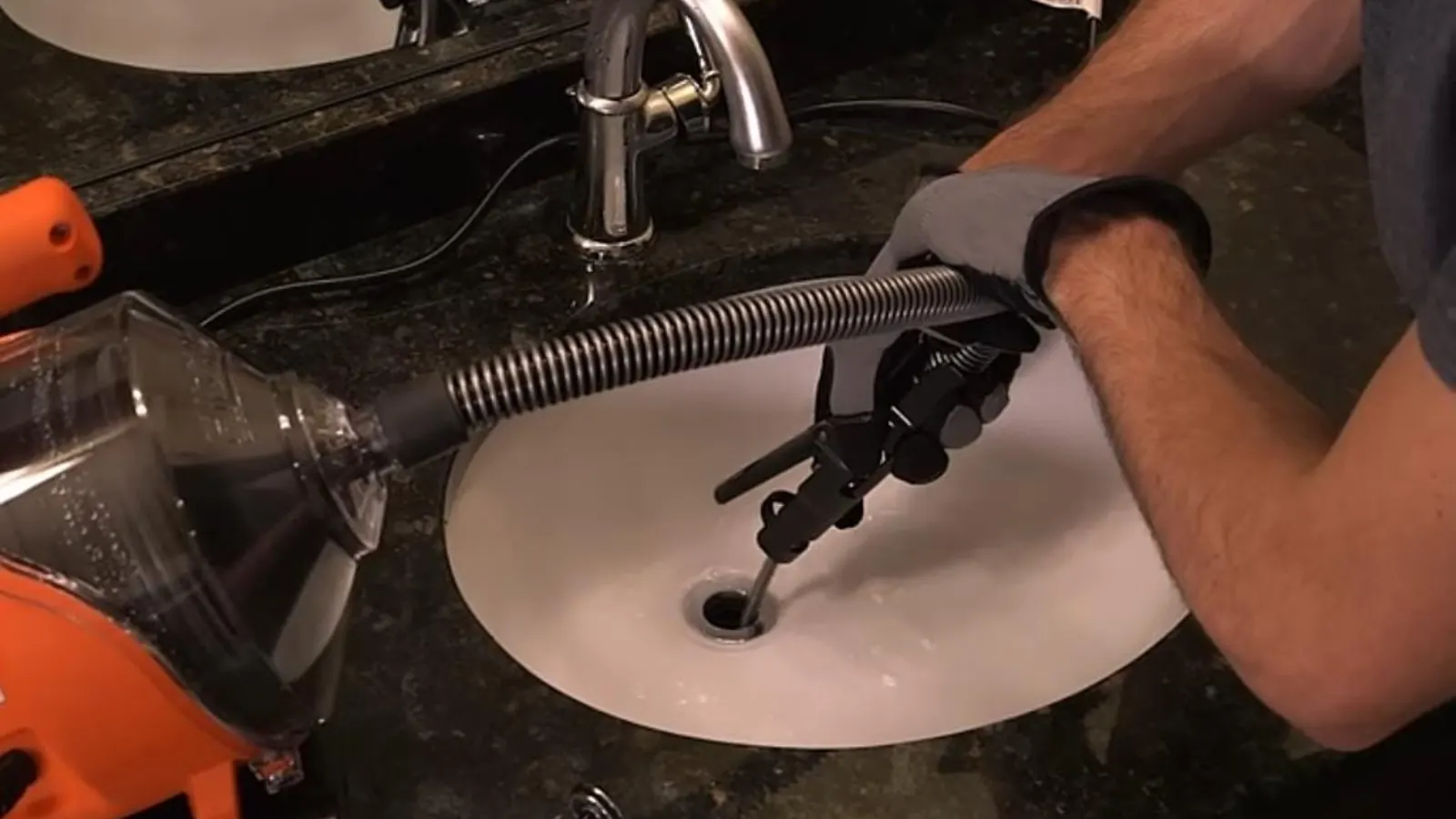
| Kitchen grease. | Hot water and dish soap, then a hand auger if needed. |
| Toilet. | A flange plunger or a closet auger. |
| Several fixtures slow at once. | Stop and call a plumber, the main line is likely blocked. |
Chemical drain openers are caustic. They can sit in a blocked pipe, harm old metal and splash on the next person who opens the trap. We do not recommend them, and a plumber's cable or hydro jetting gets the job done without chemical risk.
When to stop and call
- More than one fixture is slow or backing up.
- The drain gurgles when another fixture runs.
- Water backs up in the lowest drain in the house.
- The clog returns within days or weeks.
- You smell sewage.
Those signs point to a main line or a damaged pipe, not a film at the opening. Our drain cleaning page explains how we tell, and our sewer line cleaning page covers the main line itself.
Why the cleaner you choose matters for old pipes
Pipes in older houses are often cast iron, galvanized steel or clay, and they tolerate chemicals differently from PVC. Caustic cleaners generate heat and can soften plastic joints. Acid cleaners can eat into old metal. Neither dissolves hair, and neither reaches a clog beyond the first few feet.
Enzymatic cleaners are slower and gentler. They digest organic buildup over hours and are safe for most pipes. They are a maintenance tool and not an emergency fix. Used monthly in a kitchen drain, they can reduce grease film.
| Cleaner | Good for | Caution |
|---|---|---|
| Baking soda and vinegar. | Freshening, light film. | Does not clear a real clog. |
| Enzyme cleaner. | Slow organic buildup. | Takes hours and works best when the drain sits unused. |
| Caustic drain opener. | Not recommended. | Splash hazard, harms old pipe. |
| Hand auger. | Hair, close clogs. | Needs the right technique. |
| Professional cable or jetting. | Deep clogs, roots, grease. | Needs equipment. |
Making a kitchen drain last
Most kitchen clogs begin as a grease film that nobody sees. A few habits slow it. Pour cooled fat into a can. Wipe plates before rinsing. Run hot water for a minute after dishes. And once a month, flush with hot water and a squirt of dish soap to cut the film.
A realistic plan for a slow drain
- Remove the stopper or strainer and pull out any hair or debris by hand.
- Flush with a kettle of hot, not boiling, tap water.
- Try the baking soda and vinegar mix if the drain is only sluggish.
- Use a hand auger or a drain zip tool if you can feel a plug a few inches down.
- Stop if more than one fixture is slow, and have the line checked.
Work from the least aggressive step to the most. Each step also tells you something. If hot water alone helps, the problem was grease. If a zip tool pulls out hair, you know where it was. If nothing helps and the water sits, the clog is deeper than a household tool reaches.
Keep notes on how often a drain slows. A monthly slow drain is a maintenance habit. A weekly one is a pipe problem. Tell the plumber the pattern, because it points straight to the cause.
Safety steps for home drain cleaning
- Never mix vinegar with bleach or a bleach-based cleaner. The mix releases chlorine gas. Rinse a drain with water before using a different product.
- Do not pour a caustic drain opener into a drain that is already full of standing water, because it can splash back.
- Wear gloves and eye protection when you use any drain product, and keep the bathroom fan on.
- If someone swallows a drain product or breathes fumes and feels unwell, call Poison Help at 1-800-222-1222, or 911 for severe symptoms.
Plainfield note: older pipes and the regional system
Plainfield's wastewater flows to the Plainfield Area Regional Sewerage Authority, which serves eight municipalities. The line between your house and the street is generally yours to maintain, and in older neighborhoods it may be clay or cast iron that has been in the ground for generations. The City of Plainfield's homeowner manual tells residents to run faucets regularly so water keeps moving, to check pipe joints for leaks and to consult a licensed plumber for matters it does not cover.
In houses of that age, a drain that is slow every few months usually has a pipe-condition reason behind it. A camera inspection is the way to find it.
Keeping drains clear afterward
- Use drain strainers in the kitchen, tub and shower.
- Wipe greasy pans with a paper towel before washing.
- Flush only toilet paper. Wipes labeled flushable do not break down.
- Run hot water for a minute after washing dishes.
- Know where your cleanout is.
If the problem is a kitchen sink with a disposal, see garbage disposal repair. We serve Plainfield, Scotch Plains and Fanwood.
Drain cleaning questions
It can loosen a light film near the opening. It does not clear a real blockage like hair, grease or roots.
Hot tap water is safer. Boiling water can soften PVC joints and crack porcelain.
No. Mixing chemicals in a pipe can create fumes and splashing.
Older cast iron or clay laterals have rough walls that catch grease and roots. A camera inspection shows the cause.
The pipe from your house to the main is generally the homeowner's. Ask the city where ownership changes at your address.