What whole house means
A single tankless unit sized to serve every fixture in the house is called a whole house system. It heats water on demand as it passes through the unit, instead of heating a tank around the clock. A smaller point-of-use unit serves one sink or shower. A whole house unit has to handle several demands at once.
The key idea is flow, not volume. A tank is limited by how much hot water it holds. A tankless heater is limited by how many gallons per minute it can heat. Once the demand passes that limit, the water runs lukewarm.
How to size a tankless heater
- List the fixtures you use at the same time. Think of the busiest morning. Two showers and a dishwasher or a washing machine is a common peak.
- Add up their flow rates. A shower head commonly uses a couple of gallons a minute, a kitchen faucet a bit more than one and a washer a few. The fixture labels show the numbers.
- Find the temperature rise you need. Subtract the incoming water temperature from the temperature you want. Colder incoming water in winter means a bigger rise and a lower flow from the same unit.
- Match the unit's rating. Manufacturers publish flow rates at several temperature rises. Choose a unit that meets your winter peak, not your summer one.
Sizing for the coldest month is the part people miss. A heater that handles the demand in July may fall short in January when the water entering the house is much colder.
Gas, electric and what each needs
| Fuel | What it needs | Watch for |
|---|---|---|
| Natural gas. | A gas line sized for the unit's input, a vent and a condensate drain. | An undersized line starves the heater. |
| Propane. | Same as gas, with conversion and a propane supply. | Fuel storage and delivery. |
| Electric. | A very large dedicated circuit, often more than a panel can spare. | Panel capacity can rule out a whole house electric unit. |
Most whole house installs in homes with natural gas use gas units. A whole house electric unit pulls so much current that many older panels cannot support it. An electrician can tell you if yours can.
Maintenance you cannot skip
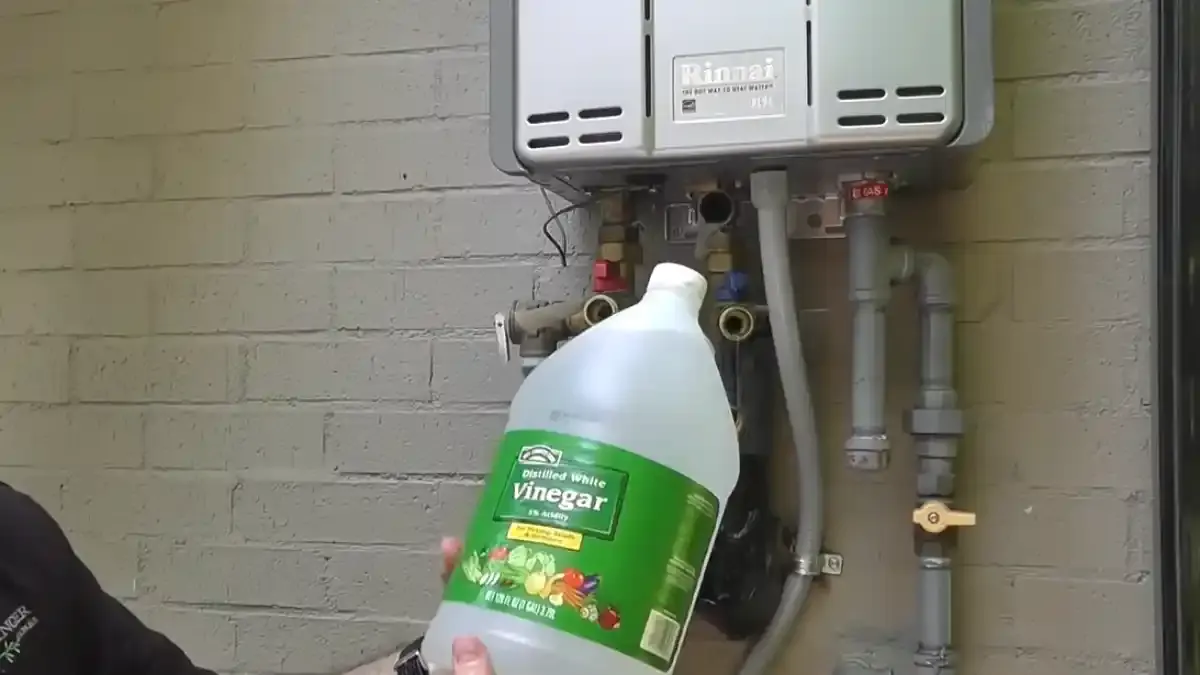
A tankless heater needs a yearly flush to remove scale from the heat exchanger. Without it, efficiency drops and the unit can lock out on an error. Check the inlet screen as well. See tankless water heater for what a service visit includes.
Keep the manual and the model number handy. If the unit shows an error code, the code usually points to the problem, whether scale, a vent restriction or an ignition fault.
Real-world examples of sizing
A couple in a two-bath house who shower at different times rarely stress a mid-size unit. A family of five with teenagers and a dishwasher running during morning showers needs more flow. A house with a large soaking tub that fills while another shower runs may need two units or a larger one.
The goal is not the biggest unit. It is the smallest unit that meets your winter peak. Oversizing raises the installation cost, the gas line requirement and the vent size without improving daily comfort.
| Household | Typical peak use | Sizing note |
|---|---|---|
| One or two people, one bath. | One shower plus a faucet. | A smaller whole house unit usually works. |
| Family with two baths. | Two showers at once. | Size for both, plus a kitchen tap. |
| Large home with tub. | Tub fill with a shower. | Consider a larger unit or two. |
| Home with a recirculation loop. | Frequent short draws. | Check the loop is compatible. |
Recirculation and wait times
Tankless heaters deliver hot water quickly once they fire, but the pipe between the heater and the faucet is still full of cold water. A recirculation pump keeps hot water moving through a loop so it arrives faster. Some tankless models have a built-in recirculation feature, and others need an external pump.
Winter performance and what to expect
Incoming water gets much colder in winter, so the heater must add more heat to reach the same outlet temperature. Each unit has a maximum temperature rise it can deliver at a given flow. If the demand is high and the water is cold, the outlet temperature falls or the flow is limited.
That is why winter sizing is the correct basis. A household that never runs out of hot water in summer may notice lukewarm showers in January if the unit was sized by a summer calculation. Ask for the winter flow figure before you buy.
Plainfield note: water supply and permits
New Jersey American Water is the utility that lists Plainfield in its service territory. If you want to know what is in your water before choosing equipment, the utility publishes water quality information, and a test kit shows what comes from your own tap. We do not quote a hardness figure for your house, because it varies and we would rather you measure it.
The City of Plainfield's homeowner manual lists installing a hot water heater as work that needs a permit. That applies to a tankless unit as well. The Construction Division at 908-226-2665 can walk you through what to submit.
Is a whole house tankless right for you
Good fit
A household with large, simultaneous demand, limited space for a tank and a gas line that can support the unit.
Fit with limits
A small household that wants lower standby loss and has a clear vent path.
Poor fit
A home with an undersized gas line, no vent route or a small electrical panel.
Worth comparing
A tank heater with strong recovery, for a lower upfront cost.
If you are replacing a failed tank, our water heater replacement page explains the decision. For a planned change, see water heater installation. We work in Plainfield, Scotch Plains and South Plainfield.
Whole house tankless questions
Often yes, if the unit's flow rating at your winter temperature rise exceeds the combined demand.
The demand exceeded the unit's flow rating. A larger unit, a second unit or lower-flow fixtures can fix that.
They avoid standby heat loss, but the savings depend on use and fuel prices. The upfront cost is higher, so compare the whole picture.
Many manufacturers rate them for a long service life with yearly maintenance. Skipping the flush shortens it.
New Jersey American Water publishes water quality reports for its service areas. We do not give a hardness number for your address without a measurement.