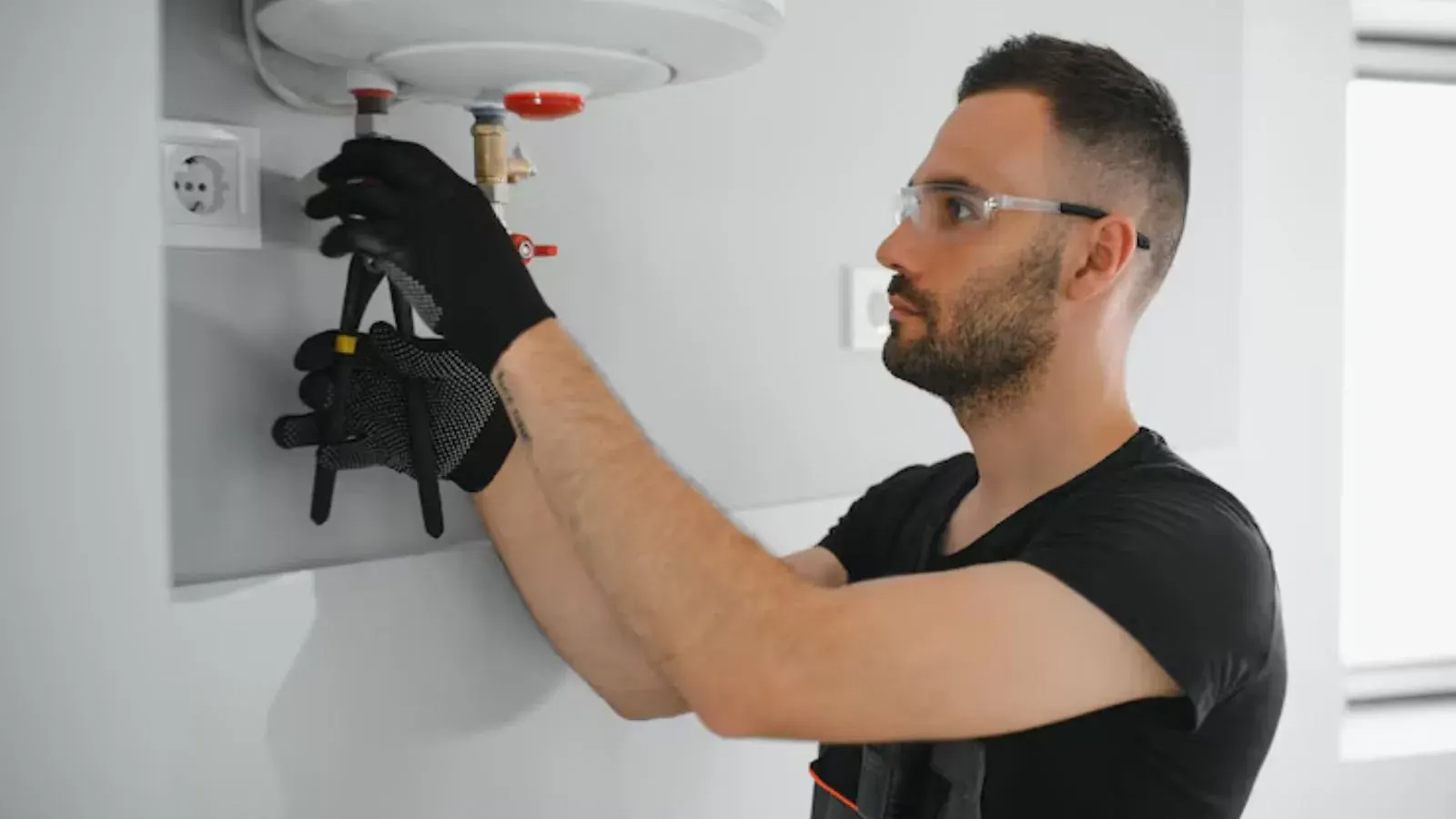
What the relief valve does
A relief valve is a spring-loaded safety valve on the top or side of the tank. If the temperature or the pressure rises past a safe limit, the valve opens and releases water through the discharge pipe. That keeps the tank from rupturing.
It is a last line of defense, not a normal part of operation. A valve that opens regularly is telling you that something else is wrong, and a valve that never opens when it should is a risk of a different kind.
Why a relief valve drips
| Cause | Sign | What helps |
|---|---|---|
| Worn or dirty valve seat. | A slow drip with normal pressure. | Replace the valve. |
| High water pressure. | Drips each time the heater runs. | Test pressure, add or fix a regulator. |
| Failed expansion tank. | Pressure spikes during heating. | Replace the expansion tank. |
| Thermostat set too high. | Valve opens, water is very hot. | Lower the setting, check the thermostat. |
| Sediment on the seat. | Intermittent drip. | Flush the tank, replace the valve if it persists. |
A valve that drips should not be capped or plugged. A blocked relief valve defeats its purpose. If you see a steady drip, a pool at the base of the discharge pipe or steam, treat it as urgent and call a plumber.
How to test the valve
- Confirm a discharge pipe is in place. A pipe should run from the valve down to within a few inches of the floor or to a drain.
- Put a bucket under the pipe. The test releases hot water.
- Lift the lever briefly. Raise it for a second or two and let it snap back. Stay clear of the pipe outlet.
- Watch the result. Water should flow, then stop when you release the lever. A trickle that does not stop means the seat is not sealing.
- Replace the valve if it does not release or does not reseat. A stuck valve is a safety risk.
Do this at a time when you can deal with a possible leak. An old valve can start dripping after being tested, and that tells you it was ready to fail.
Replacing the valve
Replacing a relief valve is a modest job, but it involves shutting off power or gas, closing the cold supply and draining part of the tank. The new valve must match the pressure and temperature rating of the tank. The discharge pipe must be the right size, run downhill and end where hot water cannot hurt anyone.
A valve that keeps dripping after replacement points to pressure. In that case you may need a pressure test and an expansion tank. That is a plumbing diagnosis. See water heater repair for what we look at, and water heater replacement if the tank is old or corroded.
Signs the rest of the system needs attention
A relief valve that opens is sometimes the first sign of a larger issue. Check these while you are at the heater.
- Rust streaks near the valve or the tank fittings suggest the tank or its connections are corroding.
- A rumbling or popping noise during heating points to sediment, which traps heat and raises temperature.
- Hot water that is hotter than you set it suggests a failed thermostat.
- Moisture around the expansion tank suggests a failed bladder.
- A steady drip even with the heater off suggests system pressure is too high.
A pressure gauge screwed onto a hose bib shows the house pressure. Readings that climb overnight point to thermal expansion with no place to go. A plumber can confirm and fit the right expansion tank or regulator.
Gas and electric heaters differ slightly
On a gas heater, the relief valve works alongside the gas control valve, which shuts off the burner at a set temperature. On an electric heater, the thermostats and the high-limit switch do that job. If either safety fails, the relief valve is the final backstop.
That is why you should never ignore a valve that discharges and never plug it to stop a drip. A plugged valve turns a heater into a pressure vessel with no safety.
Keep a simple record
Write the test date on a label near the heater each year. Note whether water flowed and whether the valve reseated cleanly. A log of two or three entries tells a plumber a lot. It shows whether the valve is getting worse, whether pressure rose over time and whether the tank has been maintained.
Plainfield note: what the City manual says
The City of Plainfield's homeowner manual says the pressure relief valve should be tripped once a year, and that if no water comes out, the valve needs to be replaced. It also says sediment should be drained from the hot water tank every six months, or every three months if the water has high mineral content, and that a properly maintained tank will last longer than the average of five to ten years.
On permits, the same manual lists installing a hot water heater as work that needs a permit, and it says ordinary maintenance does not. Swapping a relief valve on an existing heater is ordinary maintenance in most cases. If you are unsure, the Construction Division at 908-226-2665 can tell you.
When the tank, not the valve, is the problem
If the tank is rusting at the base, weeping at a seam or older than ten years, a new valve will not save it. Valves leak first because they are the weakest point under pressure, but the tank is often not far behind. A plumber can check the data plate, the anode condition and the sediment before you spend money on a part.
We service heaters in Plainfield and in nearby Scotch Plains and South Plainfield. Bring the model and the age to the call.
Relief valve questions
It can be a warning of high pressure or temperature, or just a worn seat. Do not cap it. Have a plumber test the pressure and the valve.
Plainfield's homeowner manual says once a year. Lift the lever briefly and confirm water flows and the valve reseats.
It is possible, but you must drain part of the tank, match the rating and run a correct discharge pipe. Many people prefer a plumber for safety.
Thermal expansion raises pressure during heating. An expansion tank or a pressure regulator problem is a common cause.
The City's manual says ordinary maintenance does not need one and lists a new hot water heater as permit work. Call the Construction Division at 908-226-2665 if unsure.