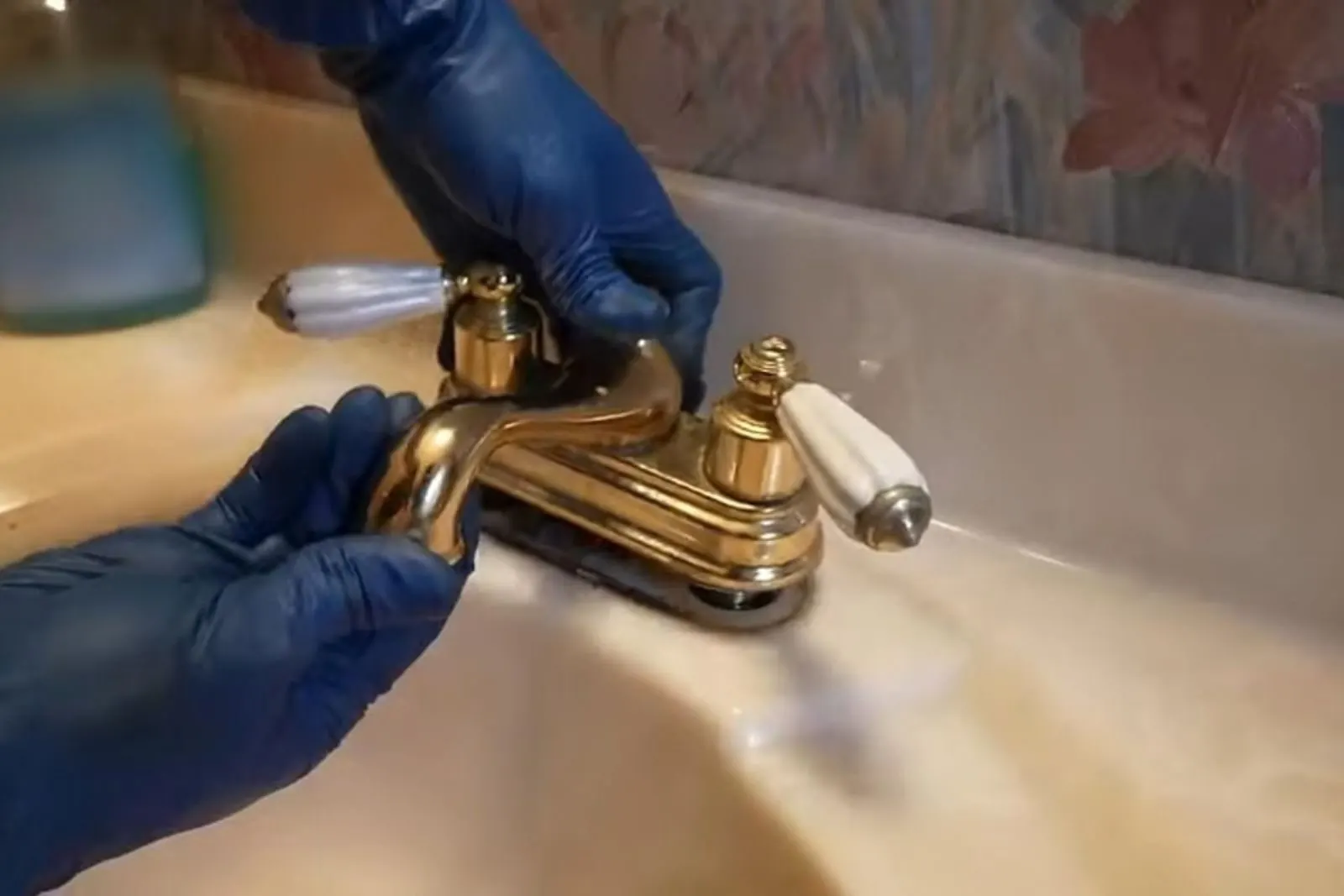
Know which kind of faucet you have
| Type | How to spot it | The part that usually fails |
|---|---|---|
| Compression. | Two handles that you turn several times. | Rubber washer and seat. |
| Cartridge. | One or two handles that move smoothly. | The cartridge or its O-rings. |
| Ball. | A single handle over a rounded cap. | Springs, seats and the ball itself. |
| Ceramic disc. | A single handle that turns a quarter turn. | The disc seals. |
If the faucet is old, check for a brand name on the handle or spout. The model number helps you order the exact part, and a mismatched cartridge will leak no matter how carefully you fit it.
Symptoms and likely causes
Drip from the spout
A worn seal or cartridge. The drip is wasteful and usually gets worse.
Leak at the handle base
A failed O-ring or loose packing nut.
Low or uneven flow
A clogged aerator or mineral buildup. Unscrew the aerator and clean it.
Water under the sink
A split supply line or a loose connection. Check before it ruins the cabinet.
How to repair a leaking cartridge faucet
- Close the shutoff valves. Turn both angle stops under the sink clockwise, then open the faucet to relieve pressure.
- Plug the drain. A dropped screw is gone for good.
- Remove the handle. Pry off the cap, undo the screw and lift the handle.
- Pull the cartridge. Remove the retaining nut or clip and slide out the cartridge. Note its orientation.
- Fit the matching cartridge. Use the same model. Grease the O-rings lightly.
- Reassemble and test. Open the shutoffs slowly and check for leaks.
If the shutoff valves under the sink will not close fully, stop. Close the main water valve and have the valves replaced first. See faucet and sink repair for what that visit includes.
When replacing is smarter than repairing
A faucet with a corroded body, a worn finish or no available parts is not worth another repair. If the faucet is decades old and the cost of parts and your time approaches the price of a new one, buy a new one. Choose a model with a common cartridge so the next repair is simple.
When you replace, replace the supply lines as well. Braided lines are inexpensive and old ones can fail without warning. A sink that also drains slowly may have a clog, and drain cleaning is the next step.
Tools and parts to have on hand
Most faucet repairs need the same short list. A basin wrench reaches the nuts behind the sink. An adjustable wrench and a set of screwdrivers cover most screws. Plumber's grease protects new O-rings. A small container holds screws so none are lost.
- A replacement cartridge or seal kit that matches your faucet model.
- New braided supply lines if the old ones are stiff or discolored.
- A flashlight for the dark space under the sink.
- A towel to protect the sink and catch drips.
- A bucket for water left in the lines.
Take the old part with you when you buy the new one. Parts that look alike often differ by a few millimeters, and the difference decides whether the seal holds.
Aerators, sprayers and low flow
Low flow at a faucet is often not a plumbing failure. A clogged aerator at the spout tip collects mineral grit. Unscrew it, soak it in vinegar and rinse it. A pull-out sprayer can also clog at its diverter. If cleaning does not restore flow, the cartridge or the supply line may be the cause.
Know when to stop and call
A repair that goes wrong can flood a cabinet. If a nut will not turn, if the cartridge will not pull out or if a pipe moves when you push on it, stop. Forcing parts can crack a supply line or damage the valve behind the wall. A plumber has pullers and the right wrenches for stuck parts, and the visit often costs less than the repair of a damaged valve. Keep the shutoff valves closed until you are sure everything is tight.
Kitchen versus bathroom faucets
Kitchen faucets work harder than bathroom ones. They run longer, take hotter water and carry a sprayer or pull-out hose. Their common failures include a leaking spray hose, a loose base and a worn diverter that sends water to the wrong outlet. Bathroom faucets are smaller and fail at the cartridge and aerator more often.
Wall-mounted and widespread faucets have separate valves and handles, so each part can fail on its own. A widespread faucet with two leaking handles may need two cartridges. Check each before ordering.
If the faucet is attached to a stone or composite countertop, be careful with the mounting nuts. Overtightening can crack the surface. Support the faucet body while you turn the nut from below, and stop when it is snug.
Plainfield note: valves, permits and old fixtures
The City of Plainfield's homeowner manual advises residents to check all shutoff valves once a year to make sure they work, and to check pipe joints for leaks and repair them immediately. In houses from the 1800s and early 1900s, valves under sinks can be original to a remodel from decades ago and may seize when finally turned.
On permits, the manual says ordinary maintenance can be done without an application. It lists installing new bathroom fixtures with rearranged piping and rearrangements to plumbing pipes as permit work. Swapping a faucet in the same spot is ordinary. Moving a sink to a new wall is not. The Construction Division at 908-226-2665 can confirm.
When to call a plumber
- The shutoff valve will not close or leaks when turned.
- Water is coming from the wall and not the fixture.
- The faucet is on a wall-mounted or concealed valve.
- You see corrosion on the supply pipe.
- You have repaired the same faucet more than once.
We repair faucets in Plainfield, North Plainfield and South Plainfield.
Sink faucet questions
Take the old cartridge to the store or note the brand and model on the faucet. Matching the exact part is essential.
The valve seat may be worn or corroded. A new washer on a damaged seat will still drip.
Replace them whenever you change the faucet, and inspect them yearly. Old lines can fail suddenly.
The City's homeowner manual says ordinary maintenance does not. Moving fixtures or rearranging pipes does. Call 908-226-2665 if unsure.
Do not force it. A valve that snaps leaves you with a flood. Close the main and replace the valve.