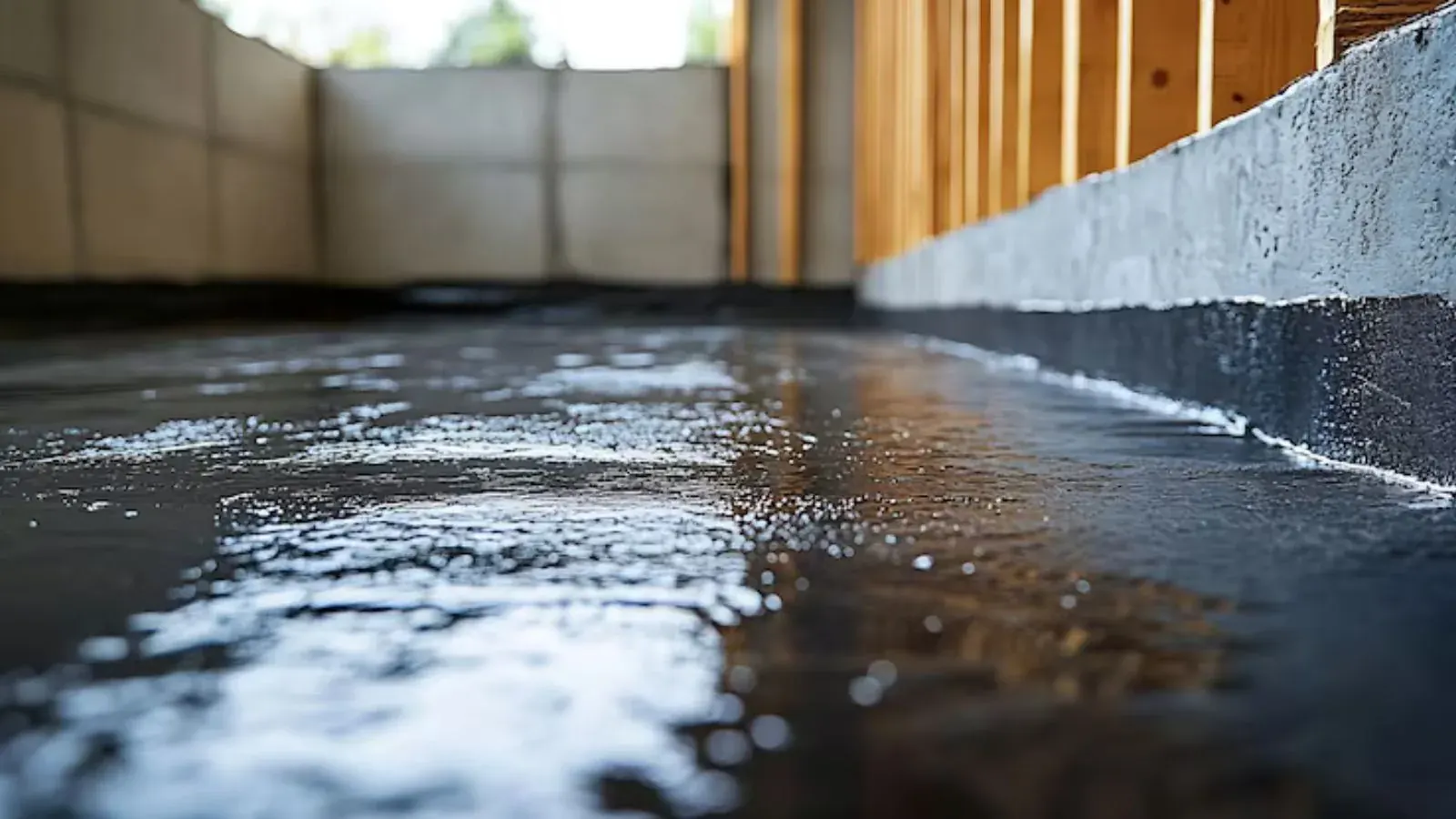
Where basement water comes from
Water enters a basement for a few reasons. Groundwater pushes up through the floor or the joint where the floor meets the wall. Surface water runs toward the foundation because of grading or a clogged gutter. Foundation walls may be cracked or porous. A plumbing leak or a backed-up drain can also look like groundwater.
The first job is to sort those apart. We test the plumbing and the drains first, since a leaking pipe is a faster fix than a drainage system. Our leak detection page explains that test.
Waterproofing options
| Approach | What it does | Best when |
|---|---|---|
| Interior perimeter drain with sump. | Collects water at the wall-floor joint and sends it to a pump. | Water rises through the floor or wall joint. |
| Sump pit and pump. | Removes water that collects below the slab. | Groundwater is the main cause. |
| Crack sealing. | Fills a specific wall or floor crack. | A single, stable crack leaks. |
| Gutter, downspout and grading fixes. | Moves roof and surface water away. | Water enters after rain from the surface. |
| Backwater valve. | Stops sewage from flowing back into the house. | Storm sewer surcharge causes backups. |
No single fix handles every house. Often a mix works best, such as better downspouts plus a sump system. See sump pump installation and repair for the pump side.
Plainfield note: flood history and older foundations
Plainfield sits along Cedar Brook and the Robinson's Branch of the Rahway River, and the Cedar Brook channel was built to catch and drain the city's floodwater. Even blocks away from the water, saturated ground can push moisture through older foundations.
Many houses here have fieldstone, brick or old block foundations laid more than a century ago. Mortar joints soften with age and let water through. Remedies for those walls differ from poured concrete, and we explain which applies to yours.
After Hurricane Ida in September 2021, North Plainfield reported homes damaged and a fire department list of residents needing basement pump-outs. Storms like that test any basement, and a plan made on a dry day works better than one made in a storm.
What we look at on a visit
- Where water has marked the walls and floor, including efflorescence, the white mineral crust left behind.
- The gutters, downspouts and the grading around the house.
- The floor drain, sump pit and any existing pump.
- Cracks, their width and whether they are moving.
- The plumbing near the wet area.
We give you an honest read on whether water control is needed or a simpler fix will do. Sometimes a downspout extension solves what looked like a major problem.
Basement waterproofing and living space
If you plan to finish a basement, plan the water control first. Drywall and flooring over a wet wall invite mold. Check your sump system, keep the floor drain clear and leave a path for water to reach it.
If a basement bathroom or laundry is planned, see plumbing installation for the drain and pump requirements.
What affects the price of waterproofing
- Linear feet of drain.A full perimeter costs more than a single wall.
- Floor and wall type.Concrete cutting and old stone take more labor.
- Pump and backup.Battery backup and alarms add equipment.
- Exterior work.Gutters and grading are separate from interior drains.
- Finishes.Finished basements require more care and restoration.
Call (908) 357-1542 and we will give you a clear price before work begins.
Safety first when water is in the basement
- Stay out of standing water if the water could reach outlets, the furnace or the electrical panel. Water and live power can be fatal.
- If you can reach the main breaker without stepping in water, switch it off. If you cannot, call the electric utility or 911 from outside the house.
- Move to the first floor and keep children and pets away from the water. Floodwater can carry sewage.
- Photograph the water line and damaged items before you clean up, since your insurer will ask.
- Do not run a gas appliance that has been in water until a qualified technician has checked it.
Code and permits for waterproofing work
In New Jersey, plumbing work is governed by the Plumbing Subcode of the Uniform Construction Code at N.J.A.C. 5:23-3.15, which adopts the National Standard Plumbing Code. Sump discharge, floor drains and any new plumbing in a basement fall under it.
Whether your job needs a permit depends on the scope, so confirm with the Plainfield Construction Division before work begins.
Basement getting wet?
Tell us when the water shows up and where. We will help you work out the cause.
Where we waterproof basements
We work across Plainfield, including the 07060, 07062 and 07063 ZIP codes, and in North Plainfield, Scotch Plains and Fanwood.
Basement waterproofing questions
Usually surface water, a high water table or a clogged gutter. Looking at where it enters tells us whether drainage, grading or a pump will fix it.
If groundwater rises through the floor or the wall-floor joint, a sump pit and pump are the usual solution.
A stable crack can be sealed. A crack that is growing or leaking in several spots needs a closer look.
It is efflorescence, a mineral residue left when water passes through masonry and dries. It shows that moisture is coming through.
We test the plumbing first. If the water stops when the supply is shut off, it is a pipe. If it follows rain, it is groundwater.
No honest contractor promises that. A good system manages water well, and a pump and backup protect against the worst storms.